
Software piracy remains a global issue, with millions of devices running unlicensed operating systems every year. Despite stronger safeguards, fake product keys and gray market licenses still circulate online. This reality keeps pressure on software makers to improve how licenses are issued, verified, and protected.
For everyday users, confusion often starts with basic questions about how to activate Windows. Windows 11 relies on familiar methods like product keys, digital licenses linked to hardware, and account-based activation. These systems work well for most people, but they can feel unclear when something goes wrong. Error messages, activation watermarks, and limited explanations leave users unsure whether the issue is technical or related to licensing rules.
How Windows 11 Activation Works Today
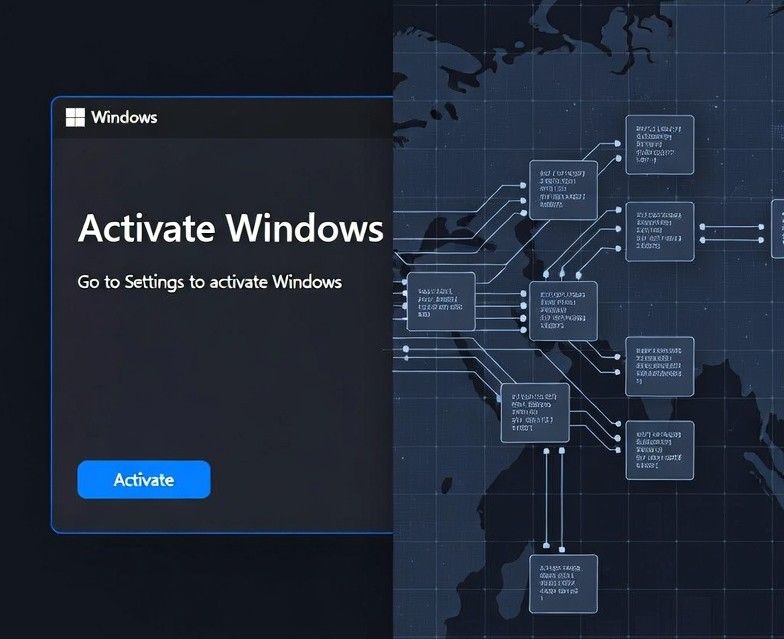
Microsoft uses several activation paths to balance ease of use and control. Retail users typically enter a product key or sign in with a Microsoft account that already holds a digital license. Many new PCs activate automatically because the license is stored in the device firmware. Businesses often rely on volume licensing tools and centralized servers to manage many machines at once.
These methods are proven and scalable. Still, they depend on central databases and trust in the issuing authority. If a key is leaked or resold without permission, it can spread quickly. Legitimate users may later discover their license is blocked, even if they paid for it in good faith.
The Limits of Traditional Licensing Models
Centralized systems are efficient, but they have weak spots. Databases can be targeted by attackers. Resellers can exploit gaps in distribution. Users have limited visibility into where a license came from or whether it was previously used. This lack of transparency fuels frustration and keeps piracy alive.
Support teams often spend time resolving disputes that are hard to verify. From a user perspective, the process feels one-sided. The system decides, and the user must accept the result.
What Blockchain Brings to the Table
Blockchain technology is built around shared, tamper-resistant records. Once data is written to the ledger, it cannot be quietly changed. Every transaction leaves a trace that can be verified by the network. This design has already reshaped finance, digital art, and supply tracking.
Applied to software licensing, a blockchain could record each Windows license as a unique digital asset. When a license is sold, transferred, or retired, that action would be logged permanently. Anyone with permission could verify the history without relying on a single central server.
Potential Benefits for Windows Users
A blockchain-based system could reduce fake keys by making duplication pointless. Each license would be traceable from creation to activation. Users could confirm authenticity before purchase, lowering the risk of scams. Microsoft could still control issuance, but verification would be more transparent.
This approach might also simplify support cases. Instead of guessing, both sides could see a clear record. For people learning how to activate Windows on new or rebuilt systems, that clarity could remove much of the stress tied to licensing errors.
Challenges and Open Questions
Blockchain is not a simple switch. It brings costs, technical complexity, and questions about privacy. Storing license data must respect user anonymity and regional laws. Performance matters too, since activation needs to be fast and reliable, even offline in some cases.
There is also the issue of control. Microsoft would still need authority to revoke stolen licenses or handle refunds. A hybrid model, combining centralized oversight with blockchain verification, may be more realistic than a fully open network.
READ ALSO: The Future of Sports Broadcasting – A Blend of Computer Technology & Blockchain
A Glimpse at the Future of Licensing
Software licensing is slowly moving toward models that feel more like digital ownership than rented access. Blockchain concepts align with that shift by offering proof, history, and trust without heavy friction. While Windows 11 does not use this approach today, the idea fits broader trends in secure identity and digital assets.
As users continue asking how to activate Windows in fair and transparent ways, new tools will shape expectations. Blockchain may not replace current systems overnight, but it could influence how future licensing protects both creators and customers.